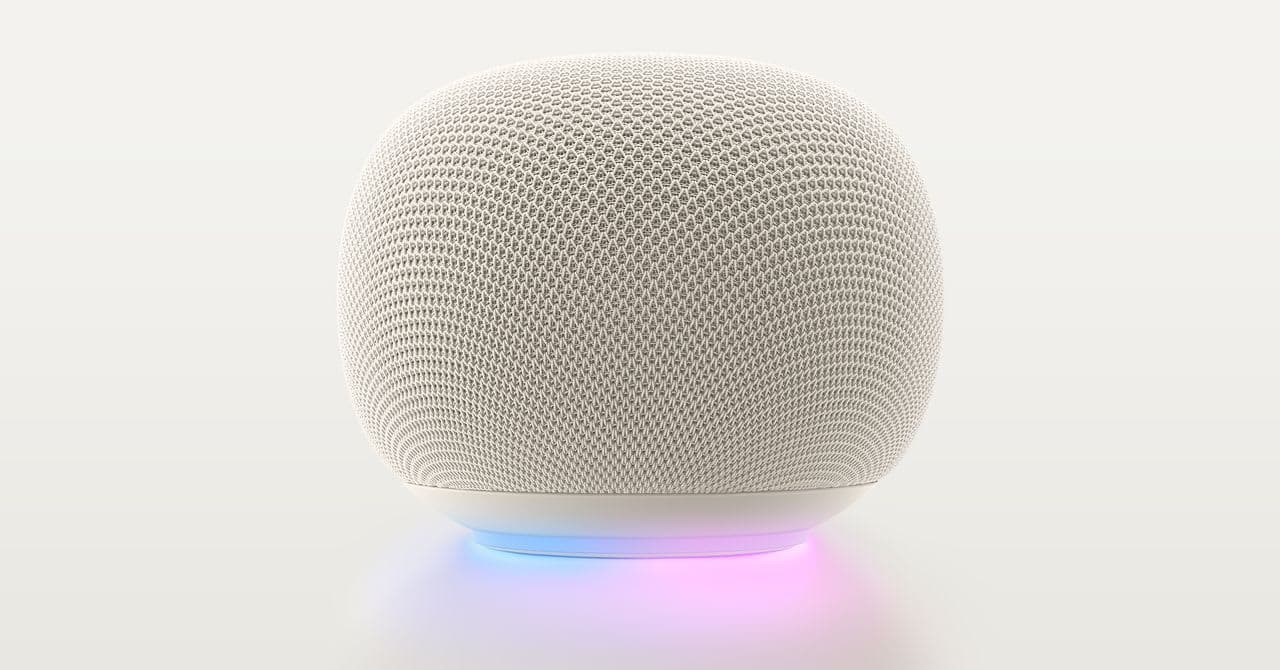
The smart home hardware landscape has felt stagnant for nearly half a decade, characterized by iterative updates and modest voice command improvements. However, the recent launch of Google’s latest smart speaker marks a definitive departure from this plateau. By integrating Gemini, the company’s flagship generative AI model, into a dedicated, high-fidelity physical device, Google is signaling that the era of passive, command-based smart homes is ending, replaced by the era of proactive, agentic interfaces.
From Simple Commands to Contextual Intelligence
For years, smart speakers functioned as glorified timers and music controllers. The interaction was rigid; users had to recall specific syntax to trigger routine automation. The new hardware architecture, purpose-built to host a multimodal LLM, fundamentally shifts this dynamic.
The integration of Gemini allows the device to process complex, multi-layered requests rather than linear strings of keywords. For business professionals integrating these tools into office or home-office environments, this shift represents a transition from "Voice-as-a-Controller" to "Voice-as-a-Collaborator." Key capabilities enabled by this pivot include:
- Contextual Memory: The device maintains state across conversations, allowing for nuanced follow-ups without repeating initial parameters.
- Multimodal Reasoning: The ability to synthesize data from calendar entries, emails, and live web queries to provide summarized, actionable insights.
- Semantic Understanding: A move away from exact-match triggers, allowing for natural, conversational language that mimics human interaction.
The ROI of Ambient AI in the Enterprise
While this hardware is branded for the consumer, the underlying shift towards Generative AI agents has profound implications for digital transformation. Companies currently struggling to bridge the gap between their CRM data and frontline staff may soon find that the "ambient interface"—the ability to query complex business data via natural voice—is the missing link in productivity.
For enterprises, the adoption of Gemini-powered interfaces suggests a path toward reducing the "friction of access." When team members can query internal documentation or retrieve customer metrics through a conversational interface rather than navigating deep-menu software, the time-to-insight drops exponentially. Businesses investing in these technologies today are effectively training their workforce to interact with the next generation of enterprise AI agents, creating a seamless transition from personal smart speakers to sophisticated, secure corporate tools.
Strategic Outlook: The Future is Conversational
We are moving away from screens as the sole gateway to digital systems. The return of the smart speaker, reimagined through the lens of sophisticated language modeling, confirms that the next big platform shift is ambient. For leadership teams, the priority should not be the hardware itself, but the underlying capability to process intent.
As these models become more adept at autonomous task execution, the potential for automating routine administrative workflows—such as updating CRM records during meetings or scheduling cross-functional syncs—becomes a reality. Organizations that prioritize the integration of AI-driven voice layers now will be better positioned to scale their automation efforts when these models move from the living room to the boardroom.
Success in this new era requires more than just deploying off-the-shelf software; it demands a strategy that bridges legacy data with intelligent, conversational interfaces. At AOODAX, we help organizations bridge this gap by designing custom AI agents that turn complex workflows into intuitive, conversational experiences.