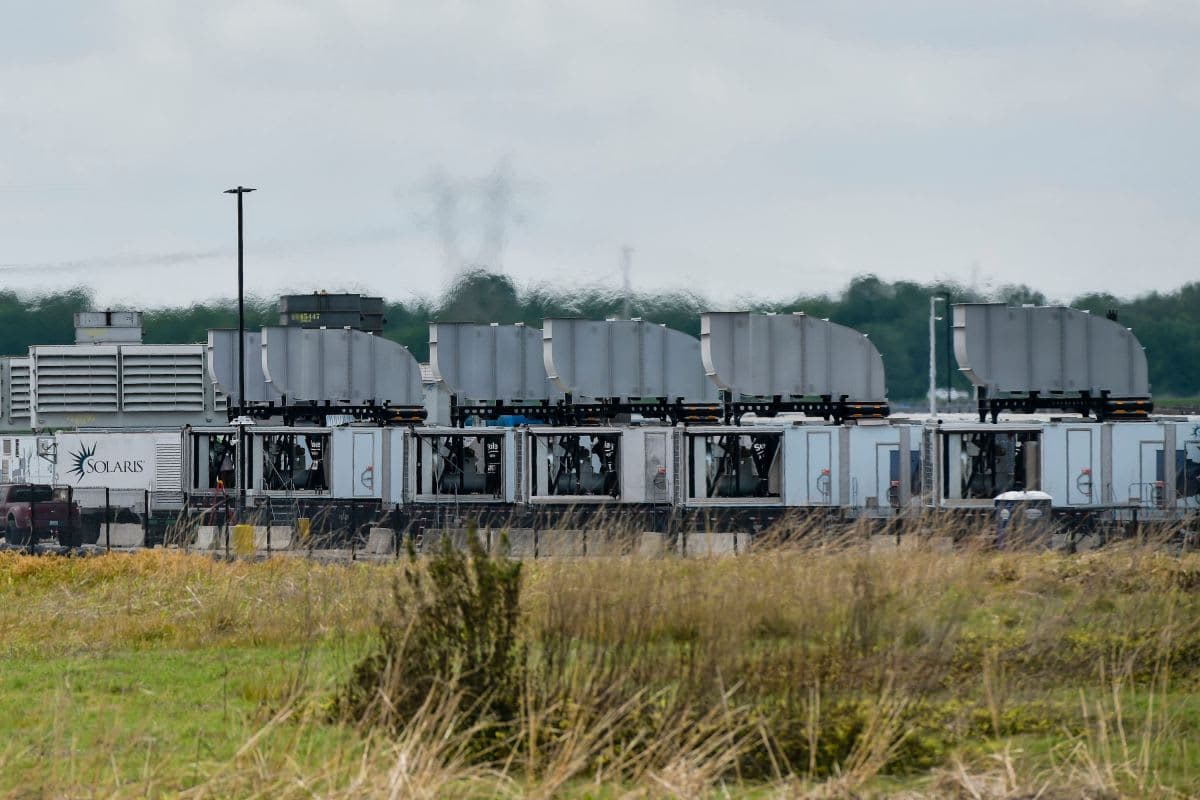
The intersection of frontier artificial intelligence and national security has long been a subject of theoretical debate, but recent legal developments are bringing the reality into sharp focus. The U.S. Department of Justice (DOJ) recently weighed in on a legal challenge involving xAI, the artificial intelligence firm founded by Elon Musk, arguing that the company’s infrastructure is “vital” to national security interests.
This assertion, surfaced during proceedings regarding environmental regulations and industrial operations, highlights a growing trend: AI companies are no longer just software vendors. They are becoming critical components of the national industrial base, comparable to traditional defense contractors or energy providers. For business leaders, this shifts the paradigm of how we view the tech stack.
The Strategic Shift to Critical Infrastructure
When a government body classifies a tech firm as essential to military-grade operations, it signals a profound change in the regulatory and operational landscape. For companies relying on cloud-based AI, this means that your vendor selection process is no longer just about model performance or cost-efficiency. It now involves assessing the systemic importance of that provider to the broader geopolitical framework.
As AI agents and automation become deeply embedded in corporate workflows, businesses must consider the stability and legal status of their underlying providers. If your enterprise is built on the back of an AI developer that is heavily tethered to national security initiatives, your digital transformation roadmap becomes subject to the ebbs and flows of government policy.
Key implications for corporate strategy include:
- Vendor Due Diligence: Evaluating the "criticality" of your AI partners to determine potential exposure to regulatory shifts or government prioritization.
- Operational Continuity: Considering whether heavy dependence on single-model architectures could become a liability if those models are redirected for national interest.
- Compliance Complexity: Recognizing that as AI firms integrate deeper into government systems, your data handling may face secondary scrutiny under new security frameworks.
ROI and the Future of AI Integration
From a business perspective, the integration of AI is primarily about driving ROI through efficiency. However, the maturation of these technologies means that we are moving beyond simple CRM automation into autonomous decision-making agents. As these agents become more capable, the "vital" nature of the companies behind them will only increase.
For business leaders, the takeaway is clear: the future belongs to those who balance the agility of cutting-edge AI with the strategic foresight of risk management. You should be building your AI architecture with modularity in mind—ensuring that your business systems remain resilient regardless of the shifting status of any single AI provider. As digital transformation continues to accelerate, the most successful companies will be those that treat AI integration as a strategic security asset rather than just a plug-and-play software expense.
Moving forward, firms that want to remain competitive must align their internal AI capabilities with the same level of strategic rigor applied by the private sector’s most advanced players. At AOODAX, we help organizations navigate this complex landscape by deploying robust, scalable AI agents that automate core business processes while ensuring your infrastructure remains agile and future-proof.